


Busy medical professionals often struggle to find time for injection training. Weekend workshops mean travel costs, booked flights, and days away from patients and shifts. Many nurses, physician assistants, and doctors end up postponing new skills for months.
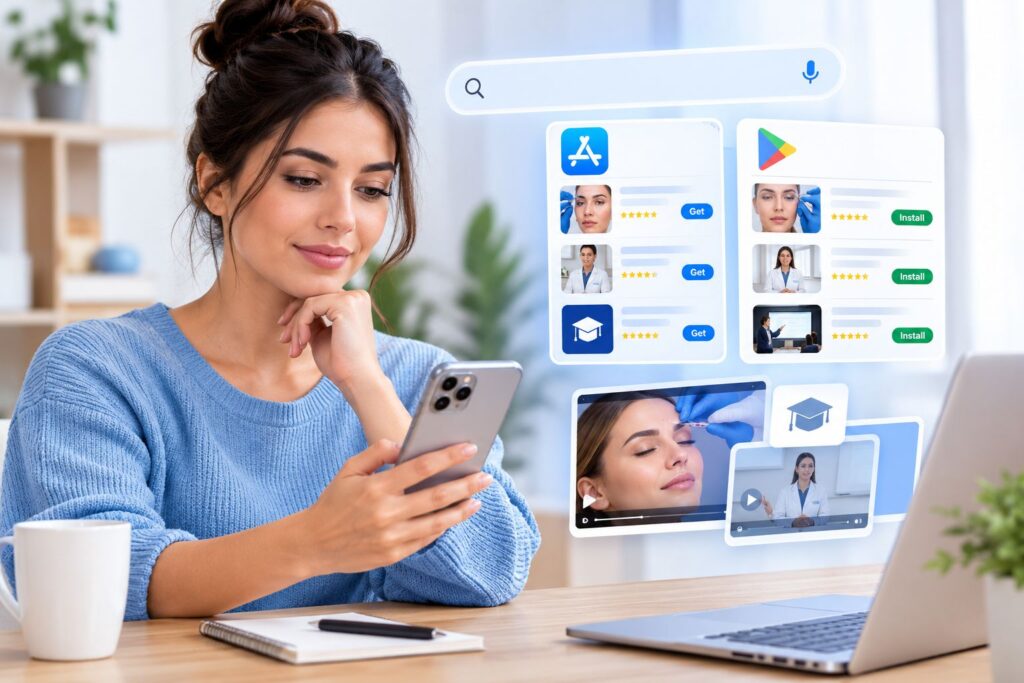
The American Academy of Cosmetic Medicine® (AACM™) now offers a fix through its official app, available on the Apple App Store and Google Play Store, so the full course fits in a pocket.
Why Is AACM™ Considered the Best Online Botox Course on a Mobile Phone?
Licensed medical professionals searching for the best online Botox course on a phone now have an accredited choice. AACM™ offers a 100% online Botox injector course designed for doctors, nurses, and aesthetic practitioners who want stronger skills in cosmetic medicine. Each online injector course is led by a plastic surgeon and covers neuromodulators, dermal fillers, and PRP/PRF. Students finish with verified certification, all from a smartphone or tablet.
Is the Course Accredited and Eligible for CME Credits?
Accreditation is usually the first thing licensed professionals check. AACM™ plans and delivers its courses with the Postgraduate Institute for Medicine. That organization is jointly accredited by the Accreditation Council for Continuing Medical Education, the Accreditation Council for Pharmacy Education, and the American Nurses Credentialing Center. It is also an ADA CERP Recognized Provider.
The course earns 8.5 CME credits recognized by the AMA, ACCME, ACPE, ANCC, and ADA. Students get 180 days to finish the 8.5-hour curriculum, which leaves room for clinic schedules and busy weeks. Those who pass the written exam receive board certification and may place the FAACM® designation after their name. This route suits medical professionals who want Botox certification online without leaving their practice.
What Does the AACM™ App Offer?
The AACM™ app was built for medical professionals who train between patients, during shifts, and on the road. Main features include:
- Learn on the go: High-definition video tutorials, clinical demonstrations, and full lecture modules stream to any iOS or Android device.
- Interactive assessments: Chapter quizzes and knowledge checks measure how much students retain along the way.
- Verified certificates: Progress tracking, assessment completion, and credential generation all happen inside the app.
- Downloadable resources: Clinical protocols, treatment guides, intake documentation, and 89 editable consent templates are ready to use.
- Easy resume: Content streams smoothly and picks up exactly where the student stopped.
Course previews and clinical demo videos let prospective students sample the teaching style before enrolling. Optional clinical shadowing in Seattle also stays open to online students.
What Does the Curriculum Cover?
The 8.5-hour program includes detailed neuromodulator training on the most widely used products: Botox, Dysport, Daxxify, Xeomin, Jeuveau, and Letybo. Hyaluronic acid fillers are covered too, along with virtual demonstrations of advanced techniques.
Lessons go beyond product names. Students learn why a neuromodulator acts differently in the glabella than in the platysmal bands. They also study how vascular anatomy guides filler placement in the temples, nasolabial folds, and under-eye area.
Who Teaches the Course?
A Seattle-based plastic surgeon leads the academy. This surgeon performs cosmetic injections personally rather than handing them off, and multiple media outlets have named the surgeon among the best plastic surgeons in the country. That hands-on experience shapes the curriculum. Hundreds of injectors have trained inside the surgeon’s own practice over the years, and students now enroll from around the globe.
What Is Included in the Course?
Every enrollment includes video lectures, clinical manuals, and a dosage guide inside the video lessons. Hands-on options are sold separately. The clinic offers 3 days of optional clinical shadowing, and the in-person training center workshops add live patient practice with 4 to 5 days of shadowing.
Who Can Enroll in the Course?
AACM™ accepts registered nurses, including those with compact licenses, along with nurse practitioners, physician assistants, physicians, and dentists. Registered nurses can inject cosmetic neuromodulators and fillers in all states, though some states require physician oversight. That is why Botox training for nurses fits well in this program. Physician assistants can inject in all states and may open their own aesthetic practices.
Practitioners who already inject can take the experience pathway. It requires a passing score on the written exam and photos of three or more completed injectable cases.
How Can Someone Start Training With AACM™ Today?
Nurses, physician assistants, physicians, and dentists can download the app from the Apple App Store or Google Play Store and preview the lessons first.
Full course details are listed on AACM™, and the complete course catalog shows every training option.
Download the app today and start earning CME credit between patients.
FAQs
How long does Botox last?
Botox results usually last about three to four months. Muscle activity slowly returns, so most patients schedule repeat visits.
Is a license required to inject Botox?
Yes. State laws and licensing boards decide who may inject and what level of supervision applies, so each practitioner should confirm local rules first.
How much does an online Botox course cost?
Fees vary by provider, course length, and whether hands-on training is included. The course page lists current pricing.
What is the difference between Botox and Dysport?
Both are botulinum toxin type A products that relax muscles. They differ in formulation, dosing units, and how far they tend to spread.
What are the common side effects of Botox?
Mild bruising, swelling, and headache are the most common. In rare cases, a drooping eyelid or brow can occur if the product spreads to nearby muscles.
Is online training enough to start injecting patients?
Online lessons build the knowledge base. Supervised, hands-on practice builds confidence with real patients, which is why many programs add shadowing.