


Medical aesthetics is evolving rapidly, and more nurses, PAs, and doctors join the field each year. The problem is that not all courses provide sufficient training. Some courses promise a lot but deliver very little in terms of real skill. If you plan to become a cosmetic injector, choosing the right course is essential. This blog covers things to keep in mind while choosing the right aesthetic injector training program.
Why should you choose the best aesthetic injector training program?
Injecting neuromodulators and fillers blends science and skill. To achieve a natural outcome, you need to understand facial anatomy, build expertise, and assess what the patient wants. The ideal course helps you think like an injector while understanding the theoretical lessons.
The wrong program will leave you unsure when you see your first client. The right program gives you the skills, confidence, and credentials to earn trust. You just need to invest in quality training by finalizing a hands-on aesthetic injector training option.
How to Choose an Aesthetic Injector Training Program
Here’s a simple checklist to use when evaluating the best aesthetic injector training programs in 2026. These insights will help you determine whether you have chosen a high-quality course or one that just issues a certificate.
Good programs are upfront about their eligibility criteria. Eligible trainees are usually registered nurses, nurse practitioners, physician assistants, doctors, and dentists. Some states require a doctor to be involved in the patient’s care, and good programs make that clear.
At the American Academy of Cosmetic Medicine®, you’ll find students from around the world. You’ve got RNs with compact licenses, you’ve got NPs, you’ve got PAs, you’ve got doctors, and you’ve got dentists. Ambiguity around who is eligible is a red flag.
1. Look for Real Hands-On Training
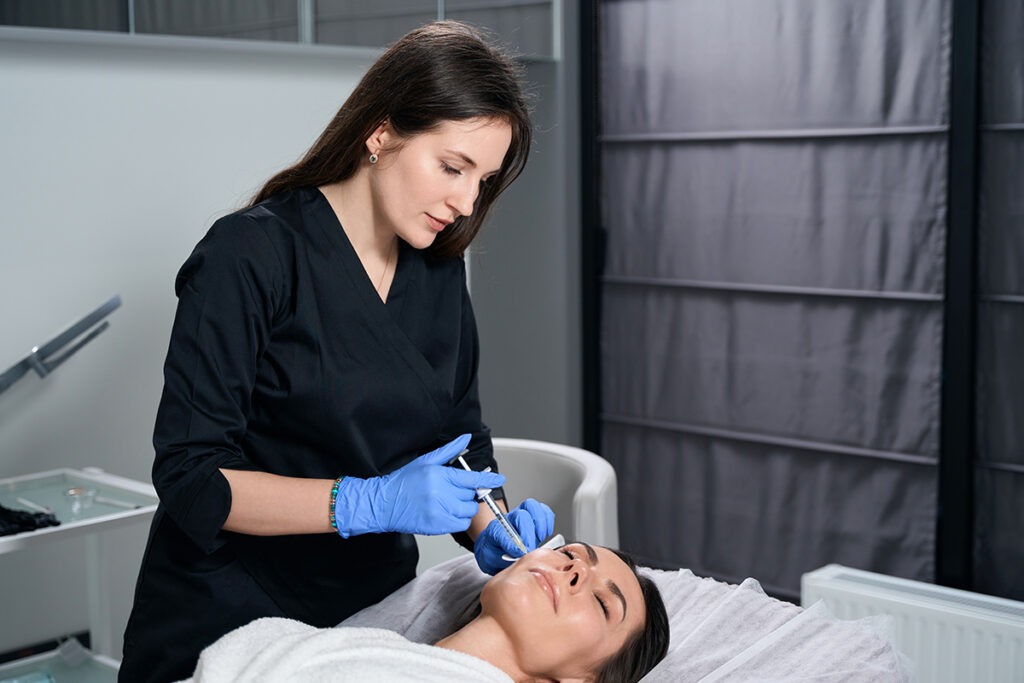
Practical training is absolutely essential. Nothing replaces the actual experience of doing the injections. Reading material and videos help, but practical skills in hands-on aesthetic injector training develop only through supervised injections. When looking at a course, ask directly how many live injection sessions it includes. The course provides hands-on work with both neuromodulators and fillers on real faces. The AACM™ beginner course includes hands-on work in the forehead, glabella, and crow’s feet, plus filler work in the lips and cheeks. The full course covers 10 or more areas with neuromodulators and 8 or more with fillers. That volume builds muscle memory.
2. Pay Attention to the Student-to-Instructor Ratio
Small class sizes are important, of course. If one teacher is guiding 20 students, you’ll get minimal individual attention during medical aesthetics training. You want a course where the teacher can actually see your technique, give you instant feedback, and answer your questions.
AACM™ keeps its student-to-instructor ratio low for a reason. The objective is to ensure that every student gets their fair share of one-to-one, hands-on time and leaves feeling ready. When evaluating any program, check the student-to-instructor ratio during the hands-on element.
3. Confirm the Certification Is Recognized
A certificate is only as good as the accreditation behind it. To protect your reputation and give your future patients the confidence they deserve, make sure the program you’re undertaking is accredited by a recognized body.
AACM™ courses are accredited for 8.5 CME credits by the AMA, ACCME, ACPE, ANCC, and ADA. After you pass the written exams, you earn the FAACM® credential, a recognized title that assures patients and employers you have received appropriate training.
4. Review the Curriculum in Detail
Don’t just look at the course title. Look at the day-by-day curriculum. A beginner course will cover facial anatomy, the basics of aging, how various injectables work (Botox, Dysport, Daxxify, Xeomin, Jeuveau, Letybo, etc.), and the basics of filler products (Restylane, Juvederm, etc.). A full course would cover the more advanced topics (lip flaps, platysmal bands, hyperhidrosis, migraine applications, difficult filler areas such as under the eyes, temples, and nasolabial folds). The AACM™ advanced course covers all of that and then some with live training in plasma harvesting and injection.
5. Ask About Shadowing and Mentorship
Observing an expert in action in an aesthetic injector training program is invaluable. A live shadow day lets you see how an experienced injector assesses a face, plans the treatment, and carries out each stage. You simply can’t get that level of insight from slides. AACM™students get a live shadow day with Dr Sajan, then have ongoing access to him for questions and guidance. This clearly demonstrates the program’s commitment to your long-term success.
Flexibility to complete the training modules matters. Some people learn best in person; others learn best online, at their own pace. The leading programs in 2026 will offer both.
AACM™ offers beginner and advanced in-person courses, plus an online course you can complete in 180 days. In-person attendees get six hours of online video and modules so they can learn the theory at their own pace and save their energy for the practicals.
6. Look at the Instructors Behind the Program
Instructors have a massive impact on the learning experience. You want instructors who are actively practicing injection and who have teaching experience. You need someone who has experience in both the clinical and the teaching end of things.
Dr Javad Sajan is an internationally recognized plastic surgeon and a skilled injector. He’s trained several providers in his practice, and he tailors his approach to each patient. That attention to detail carries over into his teaching. Learning from someone who works in the field every day keeps your training grounded in reality.
A Quick Checklist for Choosing an Aesthetic Injector Course
This checklist for choosing an aesthetic injector course will help you in finalizing the right training option at AACM™
- Clear eligibility requirements for your license type
- Plenty of real hands-on injection practice
- A low student-to-instructor ratio
- Certification recognized by major accrediting bodies
- A detailed curriculum for both basics and advanced work
- Shadowing with an experienced injector
- Flexible in-person and online formats
- Instructors who actively inject and teach
Conclusion
The best aesthetic injector training in 2026 will be hands-on, small class sizes, credible certification, and ongoing mentorship. That’s it, really. All the marketing fluff aside, those are the key factors. You get the best training through hands-on experience, recognized credentials, flexible learning, and instruction from Dr. Javad Sajan. If you’re ready to obtain aesthetic injector certification, enroll in the best course.
FAQS
1. Who can enroll in an aesthetic injector training program?
Most programs accept registered nurses, nurse practitioners, physician assistants, physicians, and dentists. Some states require physician oversight for certain roles. At the American Academy of Cosmetic Medicine®, students include RNs with a compact license, nurse practitioners, PAs, physicians, and dentists from around the world.
2. How much hands-on practice should a good course include?
Enough to build real confidence. A strong beginner course gives you live practice on areas like the forehead, glabella, crow’s feet, lips, and cheeks. A comprehensive course should cover ten or more neuromodulator areas and eight or more filler areas on real faces.
3. Is the certification recognized by employers and patients?
It should be. Look for programs tied to respected accrediting bodies. AACM™ courses are eligible for 8.5 CME credits recognized by the AMA, ACCME, ACPE, ANCC, and ADA, and graduates can use the FAACM® credential after passing the exams.
4. Can I complete the training online?
Yes, many programs now offer flexible formats. AACM™ offers an online course you can finish within 180 days, plus in-person beginner and comprehensive options. In-person registrants also receive six free hours of online video content and modules.
5. Will I get support after the course ends?
A quality program offers mentorship beyond the classroom. AACM™students get a live shadow day with Dr. Sajan and ongoing access for questions and guidance, so you are not left on your own after training.