


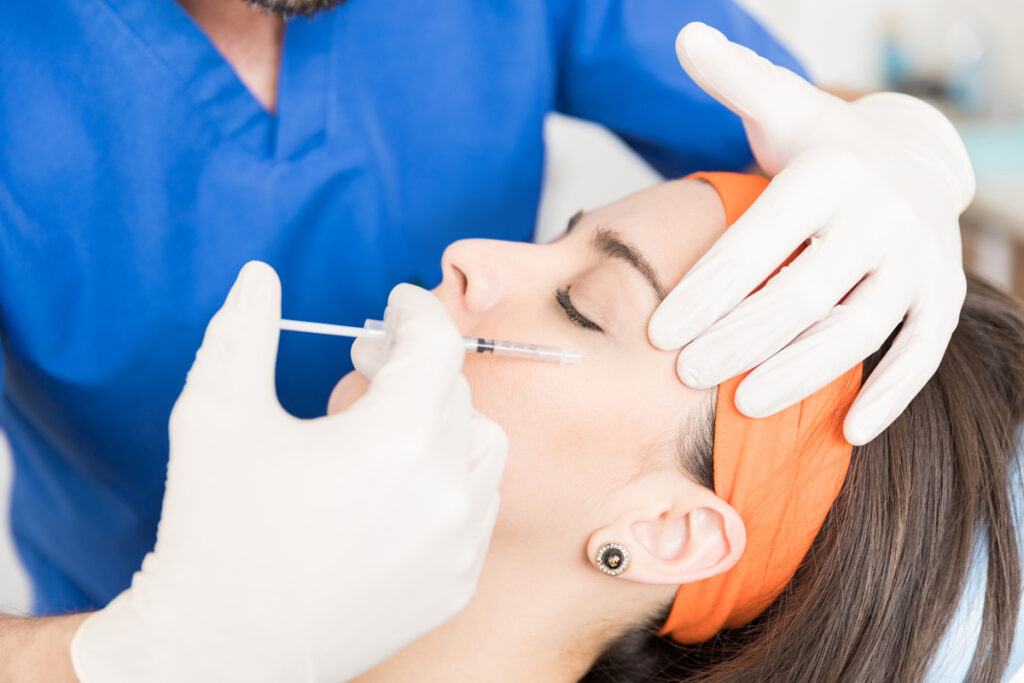
The best Botox course is offered by the American Academy of Cosmetic Medicine® (AACM™), an academy led by a practicing plastic surgeon with decades of experience in cosmetic reconstructive surgery.
Botox courses for nurses, doctors, and other licensed providers are not all the same. Some offer full medical training, while others are short workshops that cover only the basics. A weak program can leave injectors unsure about depth, dosing, danger zones, and complications. The strongest programs share four features: accredited CME credits, experienced physician instructors, a clear curriculum, and a final exam. AACM™ meets all four.
This blog covers what makes a Botox course credible, how AACM™ teaches, the pricing and enrollment options, the courses offered, who can enroll, and answers to common questions.
What Makes a Botox Course Credible?
Four factors define a strong program:
- Accredited CME credits
- Experienced physician instructors
- Demonstrated or supervised injection technique
- A written assessment
AACM™ meets all four. The academy’s online neuromodulator and filler training is jointly provided by the Postgraduate Institute for Medicine. The program is accredited by these organizations:
- American Medical Association
- Accreditation Council for Continuing Medical Education
- Accreditation Council for Pharmacy Education
- American Nurses Credentialing Center
- American Dental Association
Programs offered by AACM™ are also recognized under American Dental Association CERP standards. The course carries 8.5 CME credits for physicians, dentists, nurses, and physician assistants.
Why Does Surgeon-Led Instruction Set AACM™ Apart?
AACM™’s training is built on surgical experience. The lead instructor is a plastic surgeon who directs a cosmetic surgery practice in the Seattle area and treats patients with both surgery and injectables.
That background shapes the curriculum. Plastic surgeons operate among the facial muscles, fat compartments, nerves, and blood vessels that injectors must navigate with a needle. AACM™ applies that anatomical knowledge to injection depth, dosing, danger zones, and complication management. The surgeon teaches 12 of the 13 online modules, including standalone lessons on facial beauty and aging and on building an aesthetic practice.
Students can see this approach in person through the on-site shadowing option. Trainees join a surgical center in Kirkland, where they watch live procedures, consultations, and dosing technique alongside the surgeon.
The academy’s aesthetic medicine physician co-teaches the program and injects patients daily, with a focus on enhancing natural features through facial anatomy and proportion.
Support continues after training:
- Graduates receive 24/7 access to faculty by phone and email for difficult cases, complications, and clinical care.
- Online students also receive a one-hour meeting with instructors, which can be split into four 15-minute sessions.
How Much Does the AACM™ Botox Course Cost?
The Botox course cost at AACM™ depends on the enrollment option. Four options are available:
- Online Self-Paced: $299 plus tax. Includes 180-day access, all 13 modules, 8.5 CME credits, certification, and the FAACM® credential.
- Chairside Shadowing: $499, one-time. Includes the full online course plus in-person clinical shadowing with the plastic surgeon in Kirkland, with flexible dates.
- Dual Certification: $499, one-time. Pairs the neuromodulator and filler course with platelet-rich plasma and platelet-rich fibrin (PRP/PRF) certification. Includes 180-day access to both courses and 23 total modules covering hair, face, and danger zones.
- 1-Year All-Access Pass: $999 for 12 months. Includes every current course, any injector courses added during the year, all CME credits and certifications, and faculty support.
In-person training costs $2,600 plus tax for the Beginner Course and $5,000 plus tax for the Comprehensive Course. Group enrollments qualify for discounts of up to 10%.
What Does the Online Botox Course Cover?
The self-paced neuromodulator and filler training runs 8.5 hours across 13 HD video modules, with 180 days of access. Topics include:
- History and basics of neurotoxins
- Facial beauty and aging
- Hyaluronic acid fillers
- Lip and cheek fillers
- Masseter injections
- Hyperhidrosis
- Platysmal bands
- Traptox
- Gummy smile correction
- Migraine treatment
- Advanced jaw and lip filler techniques
- Practice management
What Certification Courses Does AACM™ Offer?
AACM™ offers two self-paced courses for certification courses online. Both are for licensed providers, and both include 180 days of access, a final exam, one year of certification, and the right to use the FAACM® credential.
Neuromodulator and Filler Online Training Course:
The Neuromodulator and Filler Online Training is the academy’s core Botox course. It includes 8.5 hours of instruction across 13 HD video modules and carries 8.5 CME credits. Most modules show live model demonstrations, and students receive downloadable clinical consent templates.
PRP and PRF Online Certification Course:
The PRP and PRF Online Certification teaches platelet-rich plasma and platelet-rich fibrin treatments, which use a patient’s own blood. The course includes 10 HD video modules and carries 3 CME credits. Topics include venipuncture, centrifuge spin protocols, hair restoration, under-eye treatment, and knee joint injections, with real patient demonstrations throughout. Naturopathic doctors are also eligible for this course.
Types of courses Available with AACM™
AACM™ offers two types of courses. Beginner and advanced comprehensive courses. Both courses are instructor-led with one-on-one training, and both make up the in-person Botox training options.
The 10-hour, one-day Beginner Course covers:
- Botox, Dysport, Daxxify, Xeomin, Jeuveau, and Letybo injections in the forehead, glabella, and crow’s feet
- Hyaluronic acid fillers in the lips and cheeks
The 20-hour Comprehensive Course adds:
- Hyperhidrosis
- Lip flips
- Platysmal bands
- Migraine treatment
- Nasolabial fold, temple, and under-eye fillers
- Plasma harvesting
Who Can Enroll in AACM™ Botox Training?
AACM™ accepts only licensed healthcare professionals. That includes Botox training for nurses, along with nurse practitioners, physician assistants, physicians, and dentists. International students are welcome, and hands-on training takes place in Washington state.
Scope of practice depends on state law:
- Nurse practitioners inject independently in full-practice states.
- In collaborative states, nurse practitioners and physician assistants inject under approved supervisory protocols.
- Registered nurses inject under the standing orders or supervision of a licensed medical director.
What Do Students Say About the Course?
A student shares an experience with the program in this video:
Botox Injection Course | Student Testimonial
How Do Certification and the FAACM® Credential Work?
Students complete all modules, pass a written exam, and submit a certification application. Certification is issued by email and remains valid for one year. Graduates may use the FAACM® credential, short for Fellow, American Academy of Cosmetic Medicine®. It is a federally registered trademark reserved for certified AACM™ graduates.
What Is the American Academy of Cosmetic Medicine®?
The American Academy of Cosmetic Medicine® is a Washington state academy that trains and certifies cosmetic injectors. It offers CME-eligible online and in-person courses in neuromodulators, dermal fillers, and platelet-rich plasma for licensed medical professionals in the United States and abroad.
Ready to Start Botox Training in Washington?
Licensed providers looking for Botox training in Washington can explore the courses at cosmeticinjectors.org and enroll online. Questions can go to the American Academy of Cosmetic Medicine® at (425) 587-5282.
FAQs
How long does it take to become a confident Botox injector?
Completing a course builds the foundation, but becoming a confident Botox injector takes supervised practice on real patients over time. Many providers start with simpler areas such as the forehead and crow’s feet before moving to advanced treatments.
Is online Botox training enough to start injecting?
Online Botox training covers theory, anatomy, and technique, and it earns CME credits. Many providers add hands-on practice before treating patients. Legal requirements depend on state law and employer policy, so checking the state board’s rules comes first.
What is the difference between neuromodulators and dermal fillers?
Neuromodulators such as Botox relax specific muscles to soften lines caused by movement. Dermal fillers add volume or restore shape in areas such as the lips and cheeks. The neuromodulators vs dermal fillers distinction is why many courses teach both together.
Do Botox injectors need malpractice insurance?
Yes. Injectors generally carry professional liability coverage, and many employers require it. Botox malpractice insurance terms often depend on training and scope of practice, so the insurer and the state board can confirm what applies.
How long do Botox results last?
Results typically last about three to four months, so patients usually return for repeat visits. Knowing how long Botox lasts helps injectors plan follow-up schedules. Individual response varies.