
Table of Contents
- Key Takeaways
- What Does a Cosmetic Injector Actually Do?
- 1. Facial Anatomy Knowledge
- 2. Injection Techniques
- 3. Patient Consultation Skills Matter
- 4. Facial Assessment and Treatment Planning
- 5. Safety and Patient Screening
- 6. Complication Management
- 7. An Eye for Facial Balance
- 8. Clear Communication Skills
- 9. Business Skills
- 10. Clinical Judgment
- Is Medical Knowledge Enough to Become a Good Cosmetic Injector?
- How to Start Training as a Cosmetic Injector
- Why Choose the American Academy of Cosmetic Medicine® for Injector Training?
- Ready to Build the Skills Needed for Aesthetic Medicine?
- Frequently Asked Questions
- Related Links
Estimated reading time: 12 minutes
Key Takeaways
- Becoming a skilled cosmetic injector requires strong knowledge of facial anatomy, injection techniques, and patient safety.
- Aesthetic injectors must develop consultation skills, treatment planning, and the ability to manage complications effectively.
- Effective communication and business skills are essential for building relationships and thriving in the aesthetic field.
- Training programs like those offered by the American Academy of Cosmetic Medicine® prepare healthcare professionals for successful careers in cosmetic injecting.
- Aspiring injectors need to understand local regulations, patient expectations, and practice management for a fulfilling career.
Becoming a skilled cosmetic injector takes more than knowing how to hold a syringe. Healthcare professionals also need a strong understanding of facial anatomy, injection techniques, patient safety, and how to respond to complications.
Aesthetic injector training also requires skills that are not always learned from textbooks. Good injectors need to understand patient concerns, develop treatment plans, pay attention to detail, and continually improve their technique through training and practice.
Whether you are a nurse, physician assistant, dentist, or doctor, building a career in aesthetic medicine involves learning both the medical and practical sides of cosmetic injecting. In this blog, we will look at the key skills every cosmetic injector needs to develop for a safe and successful career.
What Does a Cosmetic Injector Actually Do?
A cosmetic injector performs nonsurgical treatments using products such as Botox, Dysport, Xeomin, Jeuveau, Daxxify, and dermal fillers. But the job is not simply about knowing where to place an injection.
Before treatment, the injector needs to assess the patient’s facial structure, understand what the patient wants to improve, and decide whether the requested treatment is appropriate. They also need to choose the right product, determine how much to use, and explain what results the patient can realistically expect.
This is why cosmetic injecting requires more than technical training. Injectors need a strong understanding of facial anatomy, good communication skills, careful treatment planning, and the ability to recognize and manage potential complications.
The work also varies from patient to patient. One person may want to soften forehead lines, while another may be concerned about lost volume or facial asymmetry. The injector’s role is to understand those concerns and develop a treatment approach tailored to the individual patient’s needs.
1. Facial Anatomy Knowledge
A strong understanding of facial anatomy is one of the first skills a cosmetic injector course needs to develop.
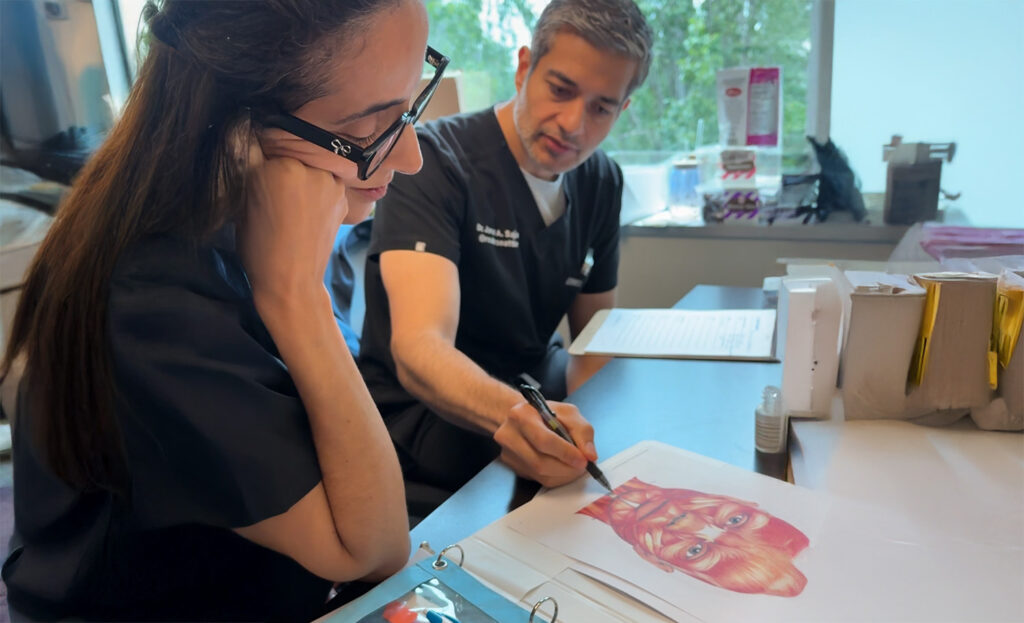
The face contains muscles, nerves, blood vessels, fat compartments, and other structures. Their location and depth can vary between patients. An injector needs to understand these structures before deciding how to approach a treatment.
This knowledge can help the injector make more informed decisions about injection sites, product placement, and treatment depth. It can also help them recognize areas that may require extra care.
Facial anatomy also affects the final result. Muscle movement, facial proportions, and existing volume can all influence how a treatment may look. A provider who understands these factors may be better prepared to create a treatment plan that suits the patient’s face rather than following the same approach for everyone.
2. Injection Techniques
Knowing what a product does is not enough. A cosmetic injector also needs to understand how to use it properly.
Training may cover different injection methods, product placement, needle or cannula use, and the depth used for different treatment areas. The right approach can vary depending on the product, the area being treated, and the patient’s anatomy.
This is one reason practical training matters. A beginner may understand the theory behind a technique but still need time and guidance to develop control and accuracy.
AACM™’s hands-on courses include training in facial anatomy, product preparation, treatment planning, and practical injection experience with neuromodulators and dermal fillers.
3. Patient Consultation Skills Matter
A consultation gives the injector important information before treatment begins.
Patients may not always describe their concerns in medical terms. Someone may say they look tired, while the concern may relate to changes in volume, muscle movement, skin quality, or a combination of factors.
A good consultation gives the injector time to ask questions and understand what the patient actually wants. It also creates an opportunity to explain what a treatment may and may not change.
Communication matters here. A patient may request a treatment that does not match their facial structure or expectations. In that situation, the injector needs to explain the concern clearly and discuss other options when appropriate.
4. Facial Assessment and Treatment Planning
Facial assessment goes beyond a glance. It involves studying the face at rest and in motion. It means noticing asymmetries, volume loss, skin quality, and how different areas relate to each other.
Some injectors take photographs before treatment. Others use specific lighting to highlight shadows and contours. Many ask patients to make various expressions so they can see how muscles move beneath the skin.
A thorough assessment can help an injector create a treatment plan that addresses the real issues rather than just the perceived ones. Sometimes a patient points to one area while the root cause lies elsewhere entirely.
This skill sharpens over time. After examining hundreds or thousands of faces, patterns emerge. But even experienced injectors approach each new patient with fresh eyes because no two faces work the same way.
5. Safety and Patient Screening
Safety begins before the injection. It must live at the center of every treatment decision.
A cosmetic injector needs to follow proper hygiene and sanitation practices. They also need to review the patient’s medical history, discuss relevant risks, and identify factors that may affect the appropriateness of treatment.
Product storage and handling also matter. Injectable products come with specific instructions, and providers should follow the manufacturer’s information and applicable professional standards.
Local laws also play an important role. The rules governing who may perform cosmetic injection training can vary by state. Scope of practice and supervision requirements may also differ. Providers need to understand the rules that apply where they practice.
6. Complication Management
Cosmetic injectors also need to know what to do when a patient develops a problem.
Common issues may include bruising, swelling, and tenderness at the injection site. These typically resolve on their own within days. More serious complications can include infection, vascular occlusion, or allergic reactions.
Preparation involves keeping emergency supplies on hand, recognizing the signs of vascular compromise, having protocols for hyaluronidase administration when working with hyaluronic acid fillers, and maintaining clear communication with supervising physicians as needed.
Equally important is the ability to stay calm. Panic helps no one. A composed injector can assess the situation, take appropriate action, and keep the patient informed without adding to their fear.
The FDA also warns that dermal filler injections can carry serious risks, including accidental injection into a blood vessel. This is one reason proper training and knowledge of facial anatomy matter.
7. An Eye for Facial Balance
Cosmetic injecting also involves judgment about proportion and balance.
The face is not a series of isolated parts. It is a composition where each element affects the whole. A great injector sees the big picture. They understand proportion, symmetry, and how light and shadow interact with facial contours.
This artistic sense helps injectors avoid the overdone look that many patients fear. It guides decisions about how much product to use and exactly where to place it. It informs conversations about what is possible and what might look unnatural.
Some people have a natural eye for aesthetics. Others develop it through study and practice. Looking at faces, studying art, and paying attention to what makes certain features harmonious can all help build this skill over time.
More product does not always mean a better result. A careful injector needs to consider the patient’s features, goals, and facial structure before deciding what may be appropriate.
8. Clear Communication Skills
Good communication affects almost every part of cosmetic injecting.
Communication comes first. Explaining treatment options in plain language helps patients feel comfortable and informed. Following up after procedures shows care and professionalism. Handling complaints with grace can turn a frustrated patient into a loyal one.
For those who work independently or run their own practices, business skills become even more important. Marketing, scheduling, pricing, and financial management all play a role in long-term success.
Even injectors who work as employees benefit from understanding the business context. Knowing how their work contributes to the overall practice can help them make better decisions and grow in their careers.
The aesthetic field rewards those who combine clinical skill with people skills. Patients return to injectors who make them feel valued. They refer their friends. And over time, those relationships become the foundation of a thriving career.
9. Business Skills
A cosmetic injector may work in a medical spa, a plastic surgery practice, or an independent clinic. In each setting, the injector needs to understand more than the treatment itself.
Patients may have questions about pricing, appointment timing, follow-up visits, and treatment plans. The injector may also need to explain why a certain treatment may require more than one appointment or why a patient may not be a good candidate for a requested procedure.
For injectors who plan to build their own practice, the business side becomes even more important. Managing appointments, communicating with patients, keeping accurate records, and building trust can all affect how the practice grows.
Clinical skill remains the main part of the job, but understanding how an aesthetic practice works can help an injector handle the wider responsibilities that come with the role.
10. Clinical Judgment
Clinical judgment is one of the most important skills an injector develops with time.
An injector needs to decide whether a treatment may be appropriate, whether the treatment plan should change, and whether it may be better not to treat.
Two patients may request the same procedure but have very different anatomy, medical histories, treatment goals, and expectations. A treatment plan that suits one person may not suit another.
This is why cosmetic injecting requires more than memorizing injection points. The injector needs to understand the patient and make careful decisions based on the situation at hand.
Is Medical Knowledge Enough to Become a Good Cosmetic Injector?
Medical knowledge gives an injector an important foundation, but it does not automatically make someone good at cosmetic injecting.
An injector also needs to know how to assess a patient’s face, understand what the patient wants to change, and decide whether the requested treatment makes sense for that person’s anatomy. Two patients may request the same procedure but require completely different approaches.
Good judgment matters just as much as technical ability. An injector needs to recognize when a treatment is appropriate, when a plan needs adjustment, and when it may be better to say no to a patient’s request.
How to Start Training as a Cosmetic Injector
The path to becoming a cosmetic injector begins with proper education and certification. Multiple pathways exist depending on current licensure and career goals.
Licensed healthcare professionals, including nurses, nurse practitioners, physician assistants, dentists, and physicians, can pursue aesthetic training through accredited programs. These programs typically combine didactic learning with hands-on practice using live models.
Structured training programs help new injectors build confidence step by step. Starting with foundational courses before moving to advanced techniques allows skills to develop in a logical progression.
Choosing the right training program matters. Look for programs that offer comprehensive anatomical education, live hands-on experience, complication management training, and ongoing support after certification.
The American Academy of Cosmetic Medicine® offers training and certification programs designed to help healthcare professionals enter the aesthetic field with confidence. Our programs emphasize safety, technique, and a well-rounded education that prepares injectors for real-world practice.
Why Choose the American Academy of Cosmetic Medicine® for Injector Training?
The American Academy of Cosmetic Medicine® offers cosmetic injector training for licensed healthcare professionals who want to add aesthetic medicine training for healthcare professionals to their clinical skills.
The training options are designed for different levels of experience. The Beginner Cosmetic Injectables Course introduces the core skills needed to start learning cosmetic injections. The course covers facial anatomy, neuromodulators, dermal fillers, treatment areas, patient preparation, and hands-on practice.
Healthcare professionals with more experience can choose the Comprehensive Cosmetic Injectables Course, which covers additional treatment areas and more advanced topics. The course also includes complex facial anatomy, patient expectations, treatment planning, and complication management.
AACM™ also offers an Online Cosmetic Injectables Course for healthcare professionals who need a more flexible way to study. The course covers topics such as facial anatomy, neuromodulators, dermal fillers, injection techniques, and patient safety. Online students can also shadow AACM™ instructors in person for additional real-world exposure.
The Academy also offers continuing education and CME-eligible programs for medical professionals seeking to further develop their knowledge in cosmetic and aesthetic medicine.
For a healthcare professional deciding where to begin, the right AACM™ course depends on previous experience. A beginner may benefit from starting with foundational training, while a provider with existing injecting experience may prefer a more comprehensive or advanced learning path.
Ready to Build the Skills Needed for Aesthetic Medicine?
The American Academy of Cosmetic Medicine® offers training programs for eligible healthcare professionals seeking to deepen their knowledge of cosmetic injections and aesthetic medicine.
Explore Cosmetic Injector Training at cosmeticinjectors.org and take the next step toward a career in aesthetic medicine.
Frequently Asked Questions
Most states require injectors to hold a valid healthcare license such as RN, NP, PA, DO, MD, or DDS. Beyond that, specialized training in botulinum toxins and dermal fillers is essential. The specific requirements vary by state, so checking local regulations is important before starting.
Basic certification courses can sometimes be completed in one to two days. However, developing true competence takes much longer. Many injectors spend months or years refining their skills through practice, mentorship, and continuing education.
This depends on state regulations. Some states allow nurses to perform injections under physician supervision or with a collaborative agreement. Others have stricter requirements. Always verify the rules in the specific state where practice will occur.
Many injectors report that managing patient expectations presents the biggest challenge. Patients sometimes arrive with unrealistic goals. Learning to have honest conversations while still making patients feel supported takes time and emotional intelligence.
Income varies widely based on location, experience, employer, and patient volume. Some injectors are salaried, while others are paid based on the procedures they perform. Those who build strong reputations and patient followings tend to see their earnings grow over time.
For healthcare professionals who enjoy patient interaction and artistic work, cosmetic injecting can offer a fulfilling career path. The field continues to grow, and skilled injectors remain in demand across the country.