


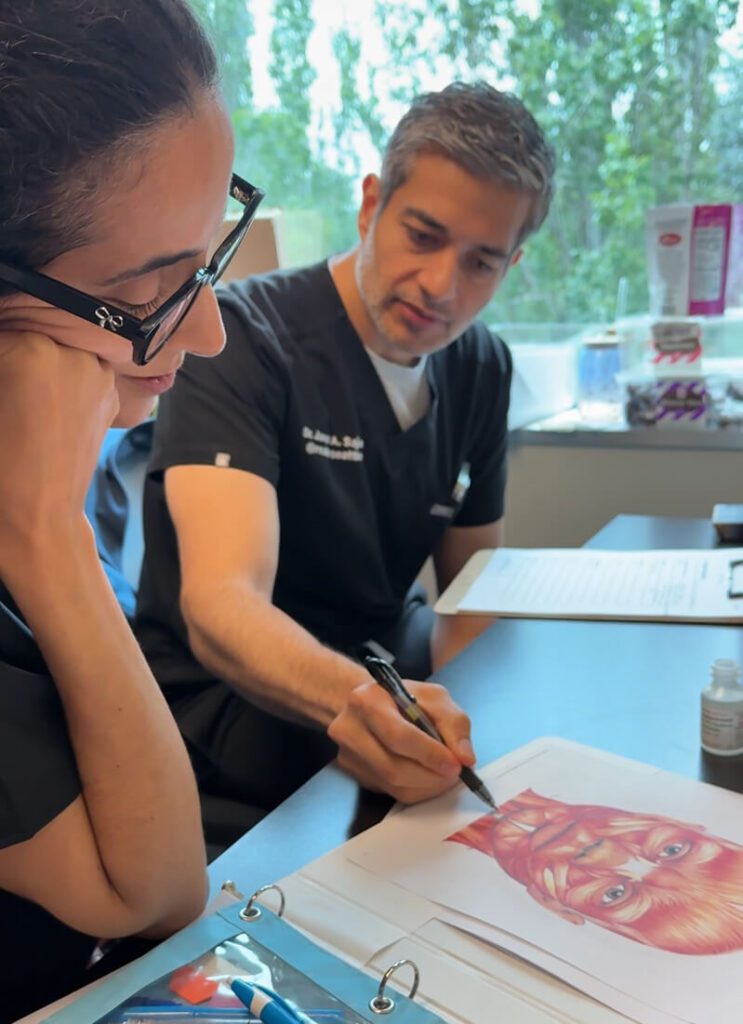
Many healthcare professionals delay entering aesthetic medicine because the certification process feels overwhelming. Between understanding state requirements, choosing accredited programs, and balancing clinical schedules with training commitments, months pass while competitors build thriving aesthetic practices. The American Academy of Cosmetic Medicine® (AACM™) offers a structured online neuromodulator certification program that transforms qualified healthcare providers into confident aesthetic injectors through a clear, week-by-week curriculum designed for busy medical professionals.
Understanding Online Neuromodulator Certification Requirements
Online neuromodulator certification has made aesthetic medicine training accessible to healthcare professionals nationwide. Neuromodulators (Botox, Dysport, Daxxify, Xeomin, Jeuveau, and Letybo) represent one of the most requested cosmetic procedures, and proper certification ensures safe, effective treatment delivery.
Before starting certification, healthcare providers must verify their eligibility. Registered nurses can inject neuromodulators and fillers in all states, though some require physician oversight. Nurse practitioners and physician assistants possess the advanced skill set needed for aesthetic injections, with PAs able to practice independently in all states. Physicians and dentists often recommend aesthetic injections to patients but can expand their practice scope by performing these procedures themselves. State regulations vary significantly, so confirming local requirements remains essential for legal practice.
Day 1-2: Foundation and Platform Navigation
The first 48 hours focus on accessing the online learning management system and establishing foundational knowledge. Modern certification platforms feature mobile-responsive interfaces that accommodate busy clinical schedules, allowing healthcare providers to study between patient appointments or during off-hours.
Initial modules cover facial anatomy review, concentrating on muscle groups relevant to cosmetic neurotoxin injections. The curriculum explores the history and fundamentals of neurotoxins, providing context for how these treatments evolved into essential aesthetic medicine tools. Healthcare providers complete baseline assessments evaluating current knowledge of facial anatomy, pharmacology, and injection techniques.
The platform provides downloadable resources, including anatomical charts, dosing guides, and safety protocols for offline review. Interactive 3D models allow exploration of facial muscle layers, helping visualize injection depths and angles crucial to optimal results and patient safety. Core topics include neurotoxin mechanisms of action, comparisons of different botulinum toxin brands..
Day 3-4: Advanced Techniques and Treatment Planning
The middle portion of the first week focuses on advanced injection techniques and comprehensive treatment planning strategies. Online modules demonstrate proper injection patterns for common treatment areas including forehead, glabella, and crow’s feet. Video demonstrations show experienced injectors performing actual procedures, highlighting proper technique, patient positioning, and safety considerations.
Healthcare providers learn reconstitution techniques for different neurotoxin products, understanding dilution ratios and their impact on treatment outcomes. Dosing calculations become familiar through interactive exercises simulating real patient scenarios. The curriculum covers differences between treating male and female patients, accounting for stronger muscle mass and varying aesthetic preferences.
Treatment planning modules teach comprehensive facial assessment techniques. Healthcare providers practice identifying dynamic versus static wrinkles, assessing muscle strength, and determining appropriate unit dosages for individual patients. The American Academy of Cosmetic Medicine® emphasizes understanding facial beauty and aging processes, examining how physiological changes impact appearance over time.
Documentation requirements receive significant attention during this phase, including proper photography techniques and consent procedures. The training addresses how facial anatomy relates to neuromodulators and fillers, ensuring healthcare providers understand the complete aesthetic treatment landscape.
Day 5-6: Safety Protocols and Complication Management
Patient safety remains paramount in aesthetic medicine. Days five and six concentrate on recognizing and managing potential complications. The curriculum covers adverse event prevention strategies, teaching healthcare providers to identify high-risk patients and anatomical danger zones. Training includes immediate and delayed complications, from minor bruising to rare but serious events like ptosis.
Emergency management protocols teach appropriate responses to various complications. Healthcare providers learn when conservative management suffices versus situations requiring immediate medical intervention. The training includes guidance on maintaining emergency supplies, establishing referral networks, and implementing office safety protocols.
Legal and ethical considerations receive thorough coverage. The curriculum addresses informed consent requirements, documentation standards, and malpractice prevention strategies. Insurance considerations, including coverage requirements and claim procedures, prepare healthcare providers for real-world practice management.
Advanced injection areas receive detailed instruction, including hyperhydrosis treatment, lip flip procedures, platysmal bands, and migraine treatment protocols. This comprehensive approach ensures healthcare providers understand both cosmetic and therapeutic applications of neuromodulators.
Day 7: Assessment and Practical Preparation
The first week culminates with comprehensive assessments testing theoretical knowledge and clinical judgment. Case-based scenarios evaluate the ability to apply learned concepts to realistic patient presentations. Healthcare providers analyze before-and-after photos, identifying successful outcomes versus suboptimal results requiring correction.
The certification exam typically includes multiple-choice questions, case studies, and video analysis components. Passing scores generally require demonstrating mastery of safety protocols, treatment planning, and complication management. The American Academy of Cosmetic Medicine® provides written exams that verify comprehension of essential concepts before healthcare providers advance to hands-on training.
Practical skills verification represents the final certification component. While online training provides extensive theoretical preparation, hands-on experience remains essential. The American Academy of Cosmetic Medicine® offers hands-on training with a student-to-instructor ratio of one instructor for every three students, ensuring personalized attention and comprehensive skill development.
Healthcare providers completing the beginner course receive hands-on training with neuromodulators in a minimum of four injection areas on the face, plus filler training in four additional areas. The comprehensive course expands this to a minimum of ten neuromodulator injection areas and eight filler injection areas, providing extensive practical experience.
Transitioning from Certification to Practice
Completing online neuromodulator certification marks the beginning of an aesthetic medicine career. The American Academy of Cosmetic Medicine® provides ongoing support through 24/7 access to instructors for questions or guidance. Healthcare providers gain the credential FAACM® (Fellow of the American Academy of Cosmetic Medicine®) upon certification, demonstrating their commitment to excellence in aesthetic medicine.
Successful practitioners continue expanding their knowledge through advanced training and conference attendance. Many pursue additional certifications in dermal fillers, hyaluronic acid treatments, and other aesthetic procedures. The American Academy of Cosmetic Medicine® (AACM™) offers courses covering advanced filler injections, including nasolabial folds, temples, under eyes, and specialized treatments like Sculptra.
Building a successful aesthetic practice requires combining clinical expertise with business acumen. The American Academy of Cosmetic Medicine® addresses practice setup, business development, and cosmetic injection brand building during training. Healthcare providers learn marketing strategies, pricing structures, and patient retention techniques that significantly impact practice growth.
Technology and Learning Support
Modern online neuromodulator certification programs leverage cutting-edge educational technology. The American Academy of Cosmetic Medicine® (AACM™) provides 6 hours of video content and modules accessible for 180 days, allowing healthcare providers to complete coursework on their schedule. Live webinars offer real-time interaction, allowing participants to ask questions and learn advanced techniques.
Discussion forums connect students with instructors and peers, facilitating knowledge sharing and problem-solving. Technical support remains available throughout the certification journey, with help desks assisting with platform navigation while clinical educators answer treatment-related questions.
The American Academy of Cosmetic Medicine® supplements online training with optional clinical shadowing opportunities. Healthcare providers can observe experienced injectors in real-world settings, gaining insight into patient consultation, treatment delivery, and practice management. This comprehensive support structure ensures successful completion regardless of technological comfort level.
Begin Your Aesthetic Medicine Journey
Healthcare professionals ready to expand into aesthetic medicine can explore structured training programs that combine comprehensive online education with hands-on practical experience. The American Academy of Cosmetic Medicine® accepts students from around the world, with hands-on training and certification.
Whether you are a registered nurse, nurse practitioner, physician assistant, physician, or dentist qualified to perform cosmetic injections, certification in neuromodulator administration opens opportunities for career advancement and practice expansion. Learn more about beginner, comprehensive, and online course options designed to fit your professional goals and schedule.
Frequently Asked Questions
How long does online neuromodulator certification typically take to complete?
Most healthcare professionals complete online neuromodulator certification within one to two weeks, dedicating 2-3 hours daily to coursework. The American Academy of Cosmetic Medicine® offers a self-paced format allowing faster or slower progression based on individual schedules and learning preferences. The online course provides 8.5 hours of content accessible over 180 days.
Are online neuromodulator certifications recognized by state medical boards?
Recognition varies by state and professional licensing board. The American Academy of Cosmetic Medicine® meets continuing medical education standards and provides certificates accepted by most regulatory bodies. Healthcare providers should verify specific requirements with their state board before enrolling to ensure compliance with local regulations.
What equipment or supplies are needed for online neuromodulator training?
Online training requires a reliable internet connection, computer or tablet, and note-taking materials. The American Academy of Cosmetic Medicine® provides comprehensive video demonstrations and downloadable resources. Physical training materials become relevant during hands-on sessions, where the academy supplies all necessary products and equipment.
Can registered nurses complete neuromodulator certification independently?
Registered nurses can complete certification training and are allowed to inject cosmetic neuromodulators and fillers in all states. However, some states require physician oversight for RNs performing aesthetic injections. Nurses with compact RN licenses can expand their skills and transition from hospital settings into aesthetic medicine through proper certification.
How much hands-on training is required after online certification?
Hands-on requirements vary by program and state regulations. The American Academy of Cosmetic Medicine® requires completion of practical training sessions with live models. The beginner course provides 10 hours of hands-on training, while the comprehensive course offers 20 hours. This ensures healthcare providers develop confidence and competence before treating patients independently.
What credentials do healthcare providers receive after certification?
Upon passing written exams and completing hands-on training, healthcare providers receive certification from the American Academy of Cosmetic Medicine® and gain permission to use the FAACM® designation. This credential demonstrates commitment to excellence in aesthetic medicine and provides credibility when building an aesthetic practice.